29 January 2012
PDF  Print This Page

Welcome

2012
  Wishing everyone safe and enjoyable riding in 2012
 
RESULTS of October Competition
   
 
 Our next Competition is on
   
Sunday 29th January 2012.
 
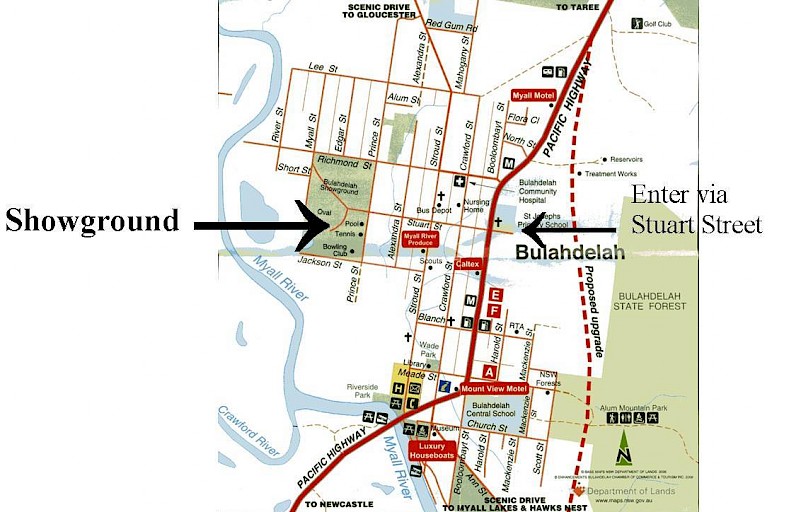
at Bulahdelah Showground
at the end of Stuart Street.
   
 
 This competition will be a T-Shirt Associate competition.
 
Click here for DRAW
  
 
Annual Membership fees fall due on January 1st 2012 - please fill in and sign a membership form including WAIVER - CLICK HERE to download. 
 
 
 ***********************
We now have for sale;
 
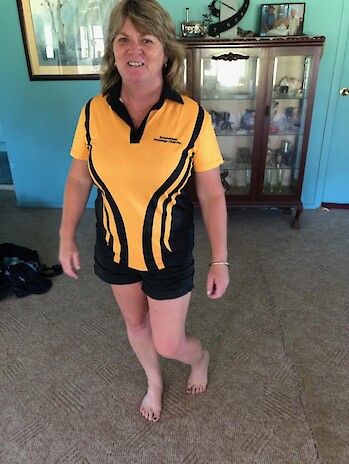
Club polo shirts  - $40.00
 
Also sun hats and caps  available at the canteen.
 
Minutes from November 2011 Meeting
 
************************** 


  HENDRA VIRUS - THE FACTS


Hendra is back with a vengeance. The fact of the matter is that it has never gone away. The disease is here, is a fact of life, and the reality is that we all have to learn to live with it. Commonsense, understanding the disease, and some basic management steps will ensure that we can all still enjoy our equestrian activities with a minimum of risk. Even better news is the remarkable progress scientists are making with the development of a vaccine which will, if universally taken up, be the answer to the problem. It looks like there is a very reasonable chance that we will have vaccine available next year. The current situation is calamitous with 4 separate outbreaks to date and the possibility of more to happen. The period May through September is regarded as the “peak period” for Hendra although it has happened throughout the year, but it appears that June, July and August have been predominant. Of some real concern is the statement by the chief veterinary officer that sampling this year has reported a 30% incidence of virus in bat samples as compared to some 10% in other years.

Basically the disease is present in fruit bats without having any apparent clinical effect on them. It is known that the virus can be shed at particular times in the fluid secretions of the bat, with saliva and urine being potent sources. A relevant fact about fruit bats is that they ingest fruit and nectar, process it in their fore stomach, and then regurgitate it or “spit” it out in what are known as spats. This material has a high concentration of saliva and potentially, could be palatable to horses as in reality it is simply processed fruit material. One of the very pertinent findings reported by Dr Hume Fields, Our own leading Queensland world authority on fruit bats, is that they have been able to find very high concentrations of virus material directly under trees in what they call the “drip zone” and almost no virus once they leave the perimeter of the trees. This area is where the spats and urine of feeding bats will be dropped and potentially an extremely high risk area for horses. These findings are not yet published but I believe that they are critical information that horse owners need to understand as it provides solid proof that there is a very real “hot zone” of opportunity for horses to become infected. The obvious outcome is that management of horses must absolutely prevent horses from access to these areas.

For a horse to contract Hendra virus, they must have direct access to a source of the virus. They will not catch Hendra virus from “the wind”. Direct access to a source of the virus means either fruit bat fluids or another infected horse that is actually excreting virus. Humans then need to be exposed to fluids from a horse excreting the virus. (Nothing has ever been proven that a human could not contract the disease directly from exposure to bat fluids so always keep that in mind). A disturbing fact is that it is now known that a horse can actually secrete the virus for a short period of time before actually displaying any clinical abnormalities. (It is critical to remember that there is an incubation period of 5 – 16 days from when the horse is exposed to the virus and when it will develop signs of disease). An understanding of these simple facts regarding Hendra virus provide us with the keys to management that will allow us to eliminate, or certainly dramatically reduce, the risks from this disease


THERE ARE 3 ELEMENTS TO THE CONTROL OF HENDRA

(1)    Prevent contact between fruit bats and horses

(2)    Monitor your horse carefully

(3)    Maintain rigorous personal hygiene


12 STEPS TO “HENDRA PROOF” YOURSELF AND YOUR HORSE


(1)                     RISK ANALYSIS  Always assess the situation and circumstances surrounding yourself and your horse and make a judgement as to the possible risk of a problem

(2)                     MAINTAIN A “PERIMETER” AROUND YOUR PROPERTY You go to all the trouble to protect yourself and your horse. Do not rely on your neighbour to do the same. Maintain a perimeter so that horses across the fence cannot contact each other

(3)                     “QUARANTINE” ANY NEW HORSES A critical issue. Remember the incubation period where an infected horse can appear normal. Isolate any new horses that arrive at your property. Most important for spelling breeding and training farms

(4)                     IDENTIFY ALL PLANTS AND TREES Know the identity of all plants and trees on your property and whether they are likely to be potential food sources for bats

(5)                     ELIMINATE FRUIT BAT FOOD SOURCES If you cannot remove dangerous plants or trees, at least fence them off or prevent your horse having any access

(6)                     FEED & WATER HORSES IN OPEN SPACES or INDOORS Do not feed or water horses near any possible site where bats may feed, roost, or perch

(7)                     STABLE HORSES or HOLD in “SAFE” YARDS at NIGHT Bats are most active at night. Ideally do not allow horses outside where bats may be traversing or feeding

(8)                     TPR YOUR HORSE DAILY So easy and such a basic monitor of your horses health. Any deviation in the horse’s temperature, heart rate, or respiration is something all owner’s should know and is a primary indicator of the horse’s health

(9)                     CLINICALLY ASSESS YOUR HORSE Owners know their horse and intuitively will pick when the horse is not themself. Investigate thoroughly any changes in signs, symptoms or behavior

(10)                 (10) WASH YOUR HANDS The most important factor of all. Strict personal hygiene is the key component in avoiding infection

(11)                 (11)  WEAR DISPOSABLE GLOVES Always have a box of disposable gloves on hand. Wear them if doing anything with a horse that involves contact with body fluids

(12)                 WEAR PPE IF IN ANY DOUBT Do not, in any circumstances, approach or attempt to do anything potentially invasive with any suspect horse without adequate personal protection equipment. Leave it to the experts.

Please feel free to call or email to discuss

David Lovell 3207 7325


Fact Sheet on Hendra from Equine Veterinarian Association    and more information here

Wendy Cohen, Monday, 11 July 2011


Hendra virus facts and why it’s different to Equine Influenza (EI)


The recent cases of Hendra virus in Queensland and NSW have generated concern for everyone associated with the horse industry. It’s important for everyone to understand the basics, and how to protect themselves and their horses from Hendra virus, and also to understand how and why this disease is different to EI.


The basics

· Hendra virus can occasionally spread from flying foxes to horses. This is an unusual event, and the circumstances that allow the spread from flying fox to horse are not fully understood. Once a horse becomes affected with Hendra, the death rate is very high. Clinical signs are VARIABLE and can include high temperature, depression, nasal discharge, problems breathing and in-coordination. The horses rapidly deteriorate within a short period of time  (few days).  Hendra virus is not very contagious, and it requires very close contact between a Hendra affected horse and a healthy horse, or a Hendra affected horse and a human, for the virus to be transferred. If a human contracts Hendra virus, it is most likely that they will become very sick, and death is a real possibility, even with treatment.


Horse movements

· Because Hendra is not highly contagious, it does not spread from farm to farm. Although it is extremely concerning that there has been a cluster of Hendra positive horses in the last 2 weeks, there is no evidence to suggest Hendra is spreading from farm to farm; all of these cases are isolated events.

· This is completely different from Equine Influenza (EI), which is a highly contagious disease. EI spreads rapidly from horse to horse and farm to farm. This is why it was necessary in 2007 to halt horse movement across NSW and Queensland to try to contain the spread of EI. EI has been eradicated from Australia and is a completely different virus to Hendra.

· Because Hendra is not very contagious, there is no need to halt horse movement in NSW or Queensland. EVA understands that there are no plans to restrict horse movement, other than on quarantined farms.

· There is a Hendra horse vaccine being developed but it will not be ready for release until 2012 or 2013. Contact your veterinarian quickly if your horse appears ill, and limit contact with sick horses until a veterinarian can assess the horse.


12 SIMPLE STEPS TO MINIMISE THE RISK OF HENDRA FOR YOURSELF AND YOUR HORSE

(Reproduced with the permission of Dr David Lovell, B.V.Sc., M.A.C.V.SC., Q.D.A.H., G.C.M. Redlands Vet Clinic, Qld)

1. WEAR DISPOSABLE GLOVES. Always have a box of disposable gloves on hand. Wear them if doing anything with a horse that involves contact with horse body fluids. THIS IS IMPORTANT.

2. WEAR Personal Protective Equipment (PPE) IF IN ANY DOUBT. Do not, in any circumstances, approach or attempt to do anything potentially invasive with any suspect horse without adequate PPE. Leave it to the Experts.

3. WASH YOUR HANDS AND EQUIPMENT. A most important factor. Strict personal hygiene is the key component in avoiding infection. Wash hands and equipment and use disinfectant.

4. TPR YOUR HORSE DAILY. Any deviation in the horse’s temperature, heart rate, or respiration is something all owners’ should know and is a primary indicator of the horse’s health.

5. CLINICALLY ASSESS YOUR HORSE. Owners know their horse and intuitively will pick when the horse is not himself. Investigate thoroughly any changes in signs, symptoms or behaviour.

6. RISK ANALYSIS. Always assess the situation and circumstances surrounding yourself and your horse and make a judgement as to the possible risk of a problem.

7. MAINTAIN A “PERIMETER” AROUND YOUR PROPERTY. Maintain a perimeter so that horses across the fence cannot contact each other.

8. “QUARANTINE” ANY NEW HORSES. A critical issue. Remember the incubation period (5-16 days) where an infected horse can appear normal. Isolate any new horses that arrive at your property.

9. STABLE HORSES or HOLD in “SAFE” YARDS at NIGHT if possible when flying foxes are most active.

10. IDENTIFY ALL PLANTS AND TREES. Know whether the trees on your property are food sources for flying foxes.

11. ELIMINATE FLYING FOX FOOD SOURCES. If you cannot remove dangerous plants or trees, at least fence them off or prevent your horse having any access. Make sure that food sources attractive to flying foxes such as fruit and vegetables are not left around horses.

12. FEED & WATER HORSES IN OPEN SPACES or INDOORS. Do not feed or water horses near any possible site where Flying Foxes may feed, roost, or perch


More information at Australian Veterinary Association website: www.ava.com.au

Qld Dept Primary Industry website: www.dpi.qld.gov.au/4790_2900.htm

Queensland Health website: www.health.qld.gov.au

  
 Rule changes from 1/1/11.......CLICK HERE
  
Here are links to recent EA newsletters;  http://www.equestrian.org.au/newsletter/  
  
Reminder to EA members applying for bridle numbers:
Riders need to apply to ENSW for allocation of bridle numbers, not DNSW.  We continue to get enquiries from riders who have been told by Clubs that they need to contact us to get a bridle number.
    
   
************************************
 
 
  Bulahdelah Showground is located at the end of Stuart Street.
 Travelling from the South turn left into Stroud Street (Bulahdelah main street) then left into Stuart Street.
 Or turn left from Pacific Highway.


<div align="cente